A spice can look good in a sample but still fail to meet the expectations of an international buyer once it reaches production, processing, or distribution.
That is why Indonesian spice quality is not determined by origin alone. The quality of Indonesian spices depends on several connected factors, including growing conditions, harvesting, drying, processing, storage, cleanliness, consistency, and compliance with buyer requirements.
Indonesia has a strong position in the global spice trade because of its long history of spice cultivation and its ability to produce a wide range of products. However, maintaining competitiveness requires more than simply having access to good agricultural resources.
For international buyers, the real question is not only where a spice comes from, but how consistently its quality can be maintained from farm to shipment.
What Makes Indonesian Spices Competitive?
Indonesia’s geography provides favorable conditions for producing many tropical spices. Different regions have their own climate, soil characteristics, elevation, and agricultural practices, creating opportunities to produce spices with distinctive characteristics.
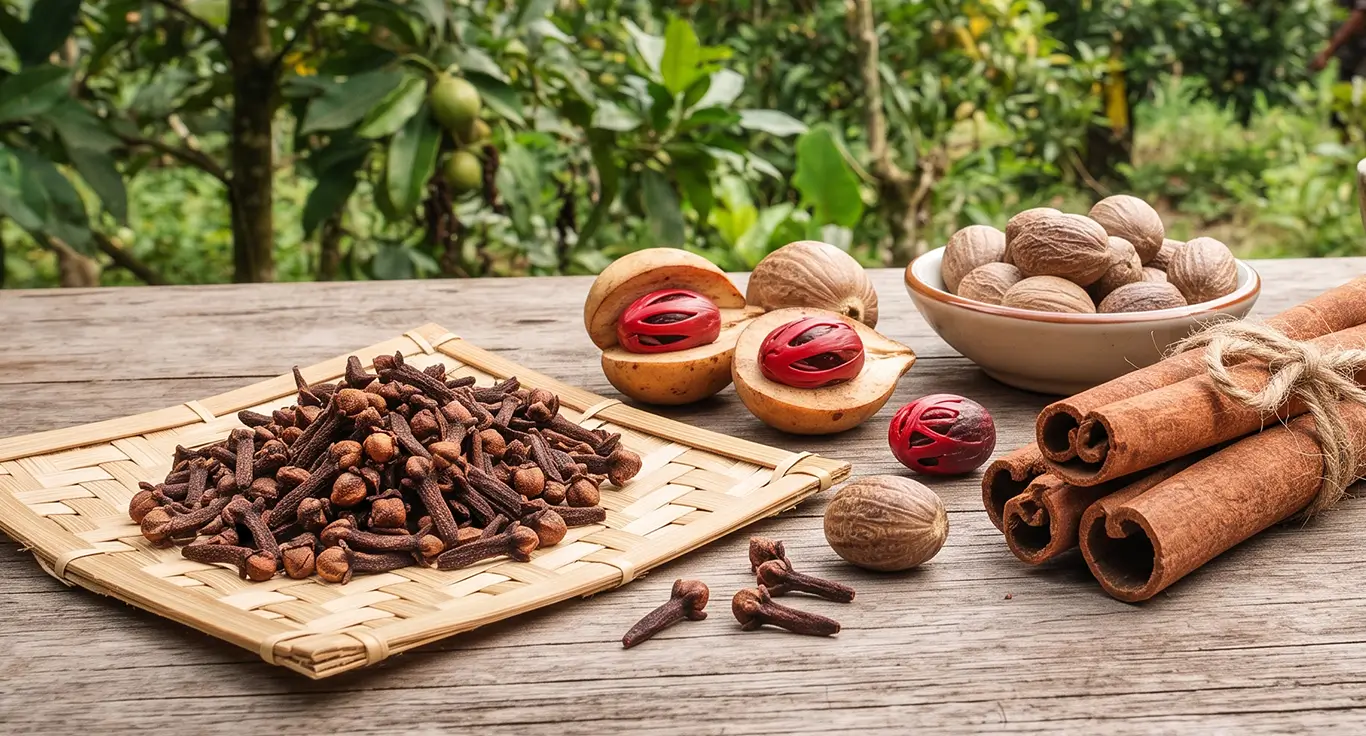
Products such as cloves, nutmeg, cinnamon, pepper, vanilla, and other Indonesian spices are valued for their aroma, flavor, color, and application in food and beverage products.
But natural advantages are only the starting point.
Global buyers typically need spices that meet specific technical requirements. They may have requirements for moisture, cleanliness, particle size, color, aroma, packaging, shelf life, microbiological safety, or other specifications.
This means Indonesia’s competitiveness depends on combining natural product characteristics with reliable quality management.
Key Factors That Define Indonesian Spice Quality
Origin, Climate, and Growing Conditions
The origin of a spice can influence its physical and sensory characteristics.
Climate, rainfall, temperature, soil conditions, and elevation can affect plant growth and the development of compounds responsible for aroma, flavor, and color.
For buyers, understanding the origin can therefore be useful when comparing different sources of the same spice.
However, origin should not be treated as an automatic guarantee of quality. Two products from the same region can have different quality depending on cultivation, harvesting, processing, and storage.
The best sourcing approach considers origin as one part of a broader quality assessment.
Cultivation and Harvesting Practices
Quality begins before the spice is harvested.
Healthy plants, appropriate agricultural practices, and proper harvesting timing can affect the final product. Harvesting too early or too late may influence characteristics such as maturity, color, aroma, or yield.
Handling at this stage also matters. Spices can be exposed to dirt, moisture, physical damage, or other contaminants if they are not handled properly.
For commercial buyers, reliable sourcing therefore requires attention to both the agricultural source and the practices used to bring the product from the field into processing.
Drying and Post-Harvest Handling
Post-harvest handling is one of the most important stages in maintaining spice quality.
Many spices need controlled drying to reduce moisture to an appropriate level. Insufficient drying can increase the risk of deterioration, mold, or other quality problems during storage.
On the other hand, inappropriate drying conditions can also affect appearance, aroma, color, or other characteristics.
The objective is not simply to make the product dry. It is to achieve stable and appropriate quality for storage, processing, and transportation.
Storage conditions matter as well. Spices should be protected from excessive moisture, contamination, pests, and unfavorable environmental conditions.
Physical and Sensory Quality
International buyers often evaluate spices through both physical and sensory characteristics.
Depending on the product, important attributes can include:
- Color and appearance
- Aroma
- Flavor
- Size and shape
- Foreign matter
- Broken or damaged pieces
- Moisture content
- Cleanliness
- Product uniformity
These characteristics can affect how the spice performs in its intended application.
For example, a food manufacturer may have different requirements from a buyer purchasing whole spices for retail packaging. A processor may prioritize specific technical characteristics, while a premium retail brand may place greater emphasis on appearance and aroma.
This is why quality specifications should be established according to the final application, rather than using one definition of quality for every buyer.
Cleanliness and Food Safety
Quality also includes safety.
Spices are agricultural products and can be exposed to contamination at different stages of production and handling. Poor drying, unsuitable storage, cross-contamination, or inadequate handling can create problems for both suppliers and buyers.
International buyers therefore need to consider food safety requirements alongside physical and sensory characteristics.
Depending on the product and destination market, buyers may require testing, documentation, certifications, or compliance with specific regulations.
A visually attractive spice is not necessarily a high-quality export product if it does not meet the required safety and compliance standards.
Consistency and Product Specifications
One of the biggest differences between an attractive sample and a reliable supplier is consistency.
A buyer may approve a sample because it meets the required specifications. The challenge is ensuring subsequent shipments maintain comparable characteristics.
For manufacturers, inconsistent spices can create problems in production. Changes in color, aroma, moisture, particle size, or other characteristics may affect the final product.
Reliable suppliers therefore need clear product specifications and quality control procedures.
Consistency is especially important for long-term B2B relationships because buyers are not simply purchasing a batch of spices. They are building a supply chain around the expected characteristics of that product.
Why Processing Matters for International Buyers
The quality of raw spices can be affected significantly by what happens after harvesting.
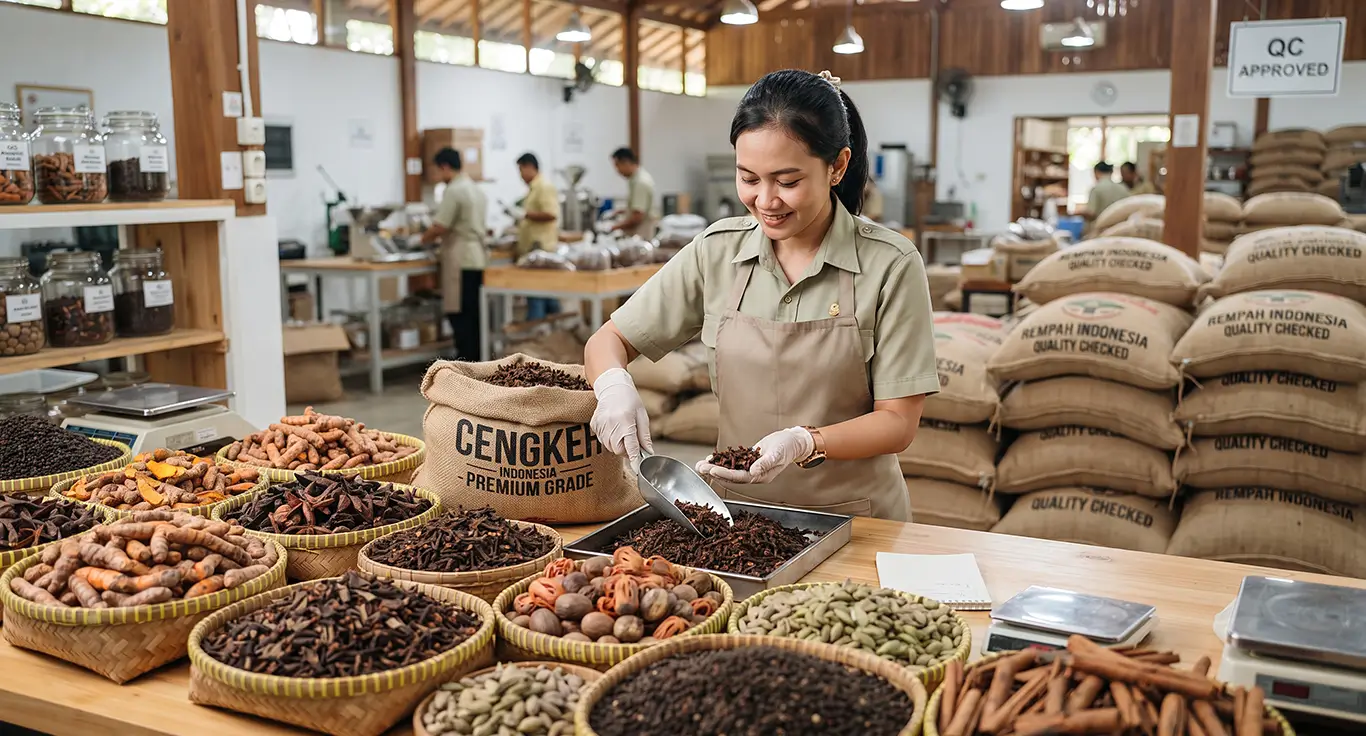
Depending on the product, processing may involve cleaning, sorting, drying, grinding, grading, or other preparation steps.
Each stage should have a clear purpose.
Cleaning helps reduce unwanted materials. Sorting can improve uniformity. Controlled processing can help produce a product that matches a buyer’s specifications.
For processed spices, the requirements can become even more specific because particle size, processing conditions, packaging, and storage can influence the product’s performance and shelf life.
This is why buyers should evaluate not only the agricultural origin but also the supplier’s processing and quality-control capabilities.
Indonesian Spice Quality Must Go Beyond the Product Itself
For international trade, product quality is only one part of competitiveness.
A supplier also needs to provide reliable communication, appropriate packaging, accurate specifications, consistent documentation, and dependable export handling.
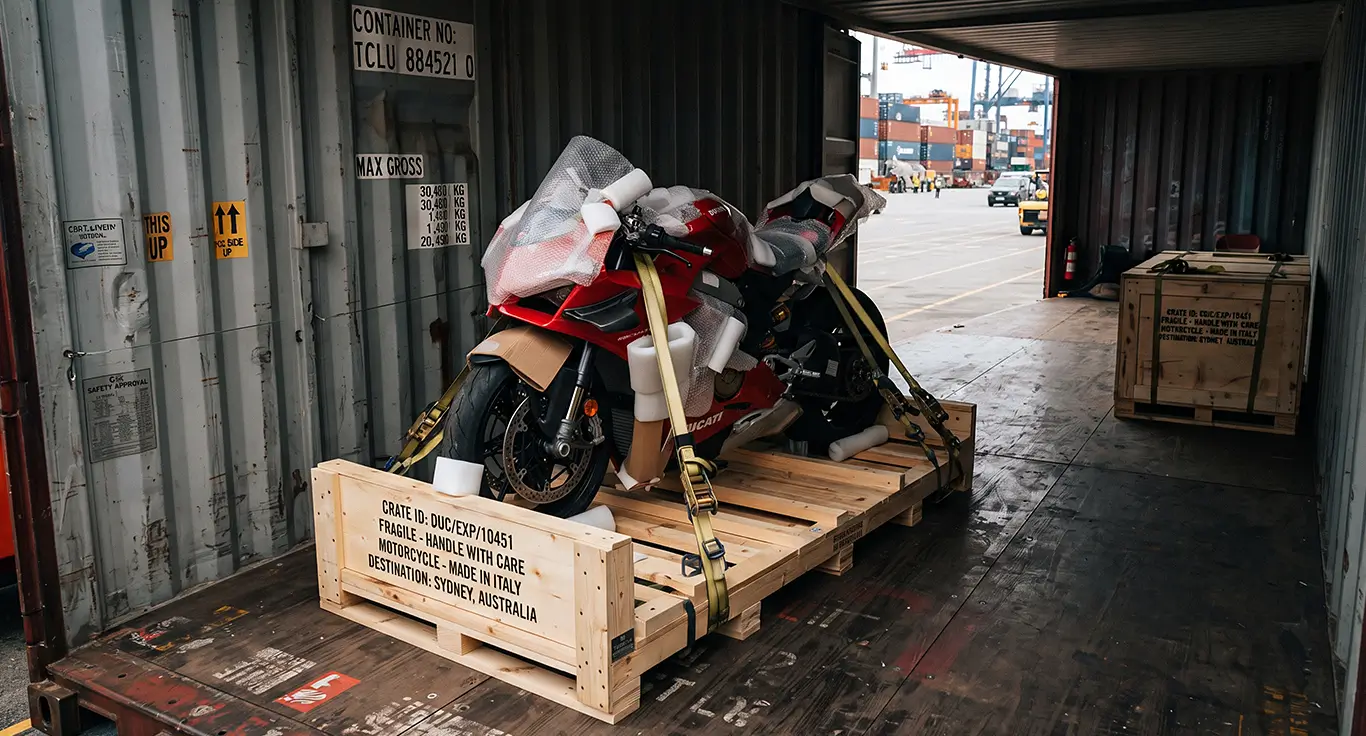
Packaging, for example, needs to protect the spice during storage and transportation. The right solution depends on the product, shipment conditions, destination, and buyer requirements.
Documentation is equally important. Buyers need confidence that the product specifications, quantity, origin, and other required information are clear and consistent with the shipment.
In other words, global competitiveness comes from the combination of:
Product quality + consistency + food safety + proper handling + reliable export execution.
What International Buyers Should Check When Sourcing Indonesian Spices
Before placing a commercial order, buyers can assess several areas:
- Product origin — Understand where the spice is sourced and whether the origin is consistent.
- Product specifications — Define measurable requirements before ordering.
- Physical quality — Check appearance, cleanliness, size, and uniformity.
- Sensory characteristics — Evaluate aroma, flavor, and color where relevant.
- Moisture and storage — Confirm that the product is properly dried and stored.
- Food safety requirements — Identify testing, certifications, and destination-market requirements.
- Processing capability — Check whether the supplier can provide the required level of cleaning, sorting, grinding, or preparation.
- Sample consistency — Compare approved samples with subsequent commercial shipments.
- Packaging and shipping — Make sure packaging is suitable for the product and transportation conditions.
A clear specification at the beginning of the sourcing process can prevent many quality disputes later.
Why Quality Consistency Strengthens Indonesia’s Global Competitiveness
Indonesia’s natural resources give its spice industry a strong foundation, but long-term competitiveness depends on turning that natural advantage into reliable commercial supply.
For international buyers, a high-quality spice is valuable when its characteristics can be maintained from one shipment to the next.
That makes Indonesian spice quality a combination of agricultural origin, proper cultivation, careful harvesting, post-harvest handling, processing, food safety, and supply consistency.
For Indonesian suppliers, focusing on these factors can help build stronger relationships with international buyers. For buyers, evaluating the complete supply chain provides a better picture of whether a supplier can meet their requirements beyond the initial sample.
The strongest Indonesian spice suppliers are not simply selling the story of Indonesia’s spice heritage. They are delivering a product whose quality can be understood, specified, checked, and consistently reproduced for the global market.