Choosing coffee for an F&B business is not simply about finding beans with a good flavor. A coffee that works beautifully as a filter brew may behave very differently in espresso, milk-based drinks, or cold brew.
This is where Indonesian coffee becomes interesting. Indonesia produces coffee from diverse growing regions, with different varieties, processing methods, and sensory characteristics. The country produces both Arabica and Robusta, although Robusta accounts for most of its coffee production. Arabica is mainly grown in higher-altitude areas, particularly in northern Sumatra, with additional production in Java, Sulawesi, Bali, and other regions.
For F&B businesses, that diversity creates more options. The important question is not whether Indonesian coffee is “good” for F&B, but which Indonesian coffee is suitable for a particular application.
Why Indonesian Coffee Is Interesting for F&B
Indonesian coffee can offer a useful combination of body, sweetness, acidity, aroma, and roast flexibility. These characteristics can make different Indonesian coffees suitable for very different menus.
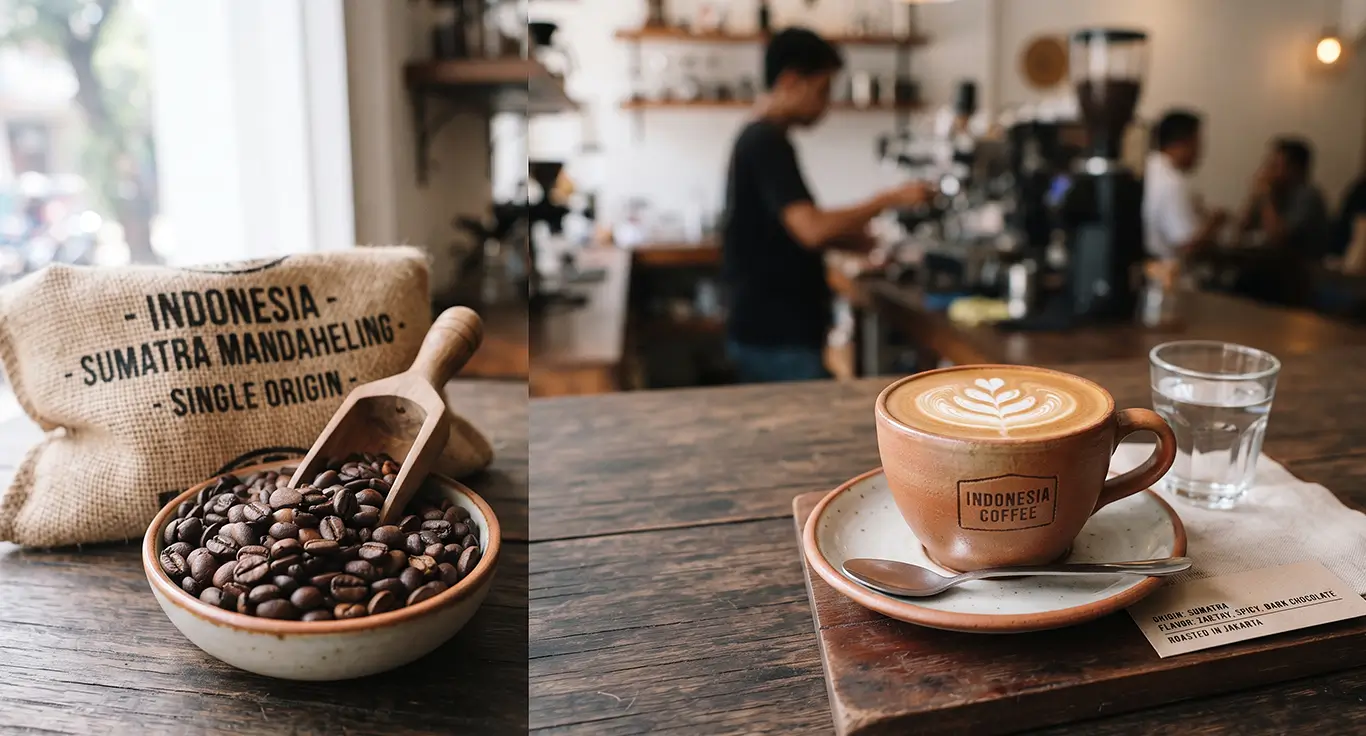
For example, a coffee with a heavier body can work well in espresso or milk-based beverages where the coffee needs enough presence to remain noticeable. A cleaner and more aromatic Arabica may be better suited to filter coffee, where the characteristics of the origin are more directly experienced.
Processing also matters. Post-harvest processing can influence the sensory profile of the final cup, meaning two coffees from the same broad origin can perform differently depending on how the cherries were processed.
This gives roasters and F&B businesses room to select coffee based on the actual product they want to create.
What Makes Indonesian Coffee Different?
Arabica and Robusta
The first distinction is between Arabica and Robusta, or Coffea arabica and Coffea canephora.
Indonesian Arabica is commonly associated with highland production and is often used where aroma, acidity, sweetness, and origin character are important. Northern Sumatra is a major Arabica-producing area, while smaller Arabica production is found in mountainous parts of Java, Sulawesi, Bali, and other regions.
Robusta has a different role. It generally provides more body and bitterness and can be useful when a coffee needs a stronger base or when the final product is designed around blends. The Specialty Coffee Association notes that Robusta tends to contain more bitterness-associated compounds than Arabica, although the actual cup character can vary significantly with genetics, agriculture, processing, and roasting.
For F&B applications, this distinction is practical. Arabica and Robusta should not be selected simply because one is perceived as “premium” and the other as “commercial.” Their different characteristics can serve different products.
Origin and Processing Matter
Indonesia’s coffee-growing landscape is highly diverse. Sumatra, Java, Sulawesi, Bali, and other producing regions can produce coffees with different sensory profiles.
Processing adds another layer. Natural, washed, honey, and other processing approaches can influence the final flavor and aroma. Research discussed by the Specialty Coffee Association shows that changing post-harvest processing parameters can affect bean composition and the sensory profile of brewed coffee.
For an F&B business, this means origin alone is not enough information. When sourcing Indonesian coffee, it is useful to ask about the species, origin, processing method, roast level, and intended brewing application.
Indonesian Coffee for Espresso and Milk-Based Drinks
Espresso requires a coffee that can maintain a balanced flavor when extracted under pressure. The challenge becomes greater when espresso is combined with milk.
A coffee with good body and sufficient intensity can be particularly useful for cappuccinos, lattes, and other milk-based beverages. Indonesian Robusta can contribute body and intensity to blends, while selected Indonesian Arabica can add sweetness, aroma, or greater complexity.
The best choice depends on the desired menu style.
For a traditional, strong espresso profile, a blend containing Indonesian Robusta may be worth considering. For a specialty-oriented cafe, an Indonesian Arabica single origin or Arabica-dominant blend may be preferred to highlight origin character.
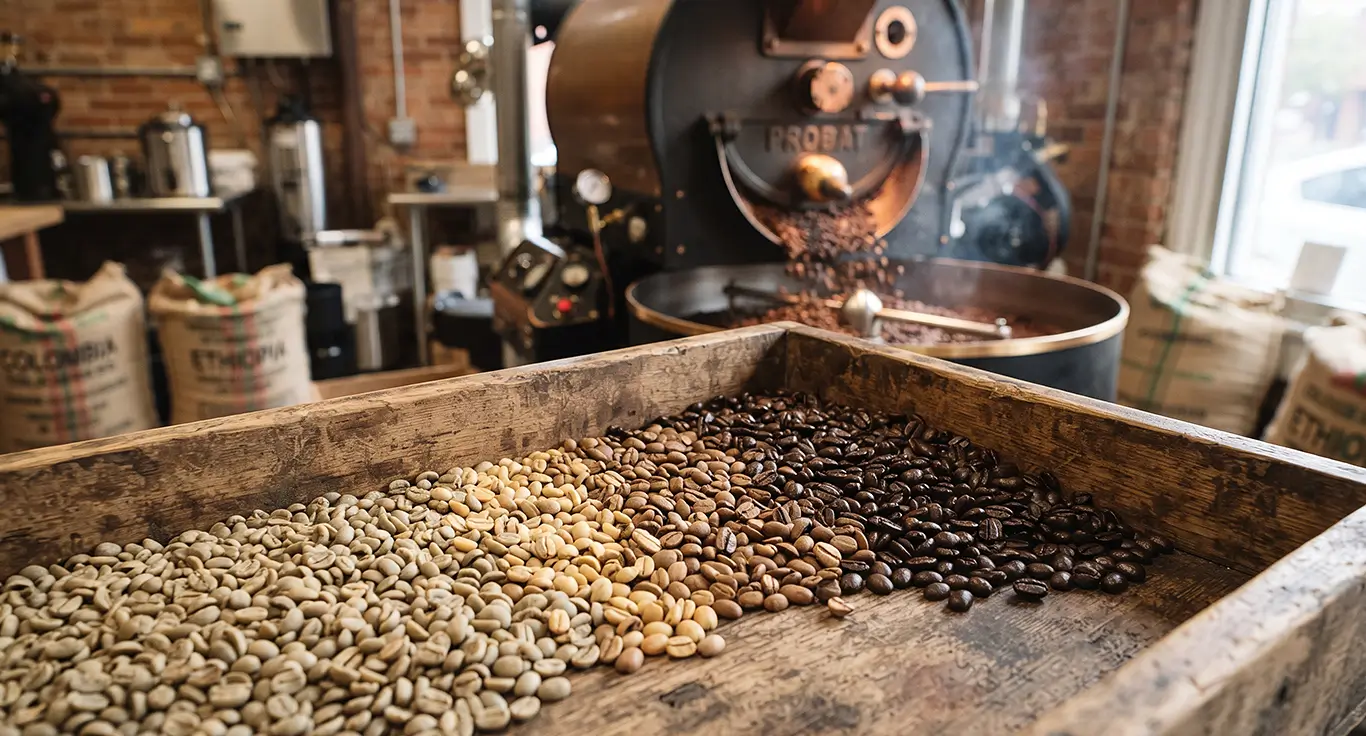
Roast development also matters. Coffee chemistry changes during roasting, including the behavior of acids and other compounds. The Specialty Coffee Association notes that roast level can have a substantial effect on coffee’s acid profile.
Therefore, the same Indonesian green coffee can perform differently depending on how it is roasted.
Indonesian Coffee for Filter Coffee
Filter brewing gives the coffee more room to express its origin and processing characteristics.
This makes selected Indonesian Arabica particularly interesting for pour-over, batch brew, and other filter applications. Customers who enjoy specialty coffee may appreciate differences between coffees from Sumatra, Java, Sulawesi, or other Indonesian origins.
For this application, the sourcing details become more important. A roaster may want to evaluate:
- Origin and elevation
- Arabica variety
- Processing method
- Green bean quality
- Roast profile
- Cup characteristics
- Consistency between lots
Filter coffee can also be a useful way for an F&B business to introduce Indonesian origin coffee as part of its menu story.
Indonesian Coffee for Cold Brew
Cold brew requires a different approach because extraction takes place over a much longer period and at a lower temperature.
Coffee with excessive sharp acidity may not always be the preferred choice for a particular cold brew recipe. Coffees with good body, sweetness, and balanced acidity can be easier to work with depending on the desired result.
Indonesian coffee can therefore be a strong candidate for cold brew, but the choice should be tested rather than assumed. Robusta and selected Arabica coffees can produce very different results, and roast profile, grind size, brewing ratio, and extraction time will also affect the final beverage.
The Specialty Coffee Association has highlighted examples of Coffea canephora being explored for cold brew because of its comparatively mild acidity in specific applications. This does not mean every Indonesian Robusta will automatically be suitable, but it shows why species selection should be connected to the intended beverage.
Indonesian Coffee in Blends and Commercial Applications
Indonesian coffee can also be valuable as a component of a blend rather than as a standalone origin.
A blend may combine different coffees to achieve a target profile, such as stronger body, balanced acidity, sweetness, crema, or a more consistent flavor across beverages.
This can be particularly useful for cafes, restaurants, hotels, and other F&B businesses that serve espresso-based drinks throughout the day.
Indonesian Robusta can contribute body and intensity, while Arabica can contribute aroma and flavor complexity. The goal is to create a coffee that performs consistently in the actual menu rather than simply selecting beans based on origin reputation.
Indonesia’s large production base also makes the country relevant for commercial coffee sourcing. USDA forecasts for 2025/26 put Indonesian coffee production at 12.5 million 60-kg bags, with Robusta accounting for the majority of output. Domestic consumption was forecast at 4.8 million bags, reflecting continued demand from roasters and processors.
How to Choose Indonesian Coffee for an F&B Product
The best way to select Indonesian coffee is to start with the beverage rather than the bean.
Consider these questions:
1. What beverage are you making?
Espresso, cappuccino, filter coffee, cold brew, bottled coffee, and other products may require different coffee characteristics.
2. Do you need body or clarity?
A full-bodied coffee may work better for milk-based drinks, while a cleaner profile can be attractive for filter applications.
3. Are you looking for Arabica, Robusta, or a blend?
The answer should depend on the desired flavor, cost structure, strength, and positioning of the final product.
4. What processing method was used?
Processing can significantly influence sensory characteristics, so it should be part of the sourcing decision.
5. Can the coffee perform consistently?
For commercial F&B operations, consistency is often just as important as a memorable first cup.
6. Has the coffee been tested in the actual recipe?
A sample should ideally be evaluated using the brewing method and beverage recipe that will be used commercially.
The Right Coffee Depends on the Product
Indonesian coffee does not have a single profile or a single F&B application. Its strength lies partly in its diversity.
Indonesian Arabica can be explored for specialty filter coffee, espresso, and premium menu concepts, while Robusta can provide body and intensity in espresso blends and other commercial applications. Processing and roasting then allow the final profile to be adjusted further.
For F&B businesses, the smarter approach is to define the desired beverage first and then select the Indonesian coffee that supports it.
That shift—from asking “Is Indonesian coffee good?” to asking “Which Indonesian coffee performs best for this product?”—makes sourcing much more practical. It also creates more opportunities to use Indonesian coffee across different types of F&B products without forcing every origin into the same role.