A spice can look good when you receive it and still create problems later if its quality changes significantly from one batch to another.
For food manufacturers, restaurants, beverage companies, and other commercial buyers, this is why Spice Quality Control matters. The goal is not simply to find spices with good flavor or attractive color. The bigger challenge is getting a similar level of quality every time you purchase.
Consistent spices make it easier to maintain the same product characteristics, control production, and meet customer expectations.
Why Spice Consistency Matters
When a spice is used as an ingredient, its characteristics can directly affect the finished product. Even relatively small differences in aroma, flavor, color, moisture, or particle size may require adjustments during production.
Flavor and Aroma
Flavor is often the first reason businesses buy a particular spice, but flavor intensity can vary between batches.
For example, if one batch of ground spice has a stronger aroma than the previous shipment, a food manufacturer may need to change the amount used in a formulation. Using the same recipe no longer guarantees the same result.
This becomes more important for products that depend heavily on spices for their identity, such as seasoning blends, sauces, instant food, snacks, and ready-to-use food ingredients.
Consistent raw materials make recipe control much easier.
Product Appearance
Color is another important quality characteristic.
Natural spices can show variation in color depending on factors such as variety, maturity, processing, storage, and origin. If the color of a spice changes significantly between batches, it may also affect the appearance of the finished food product.
For commercial products, visual consistency can matter just as much as flavor consistency.
Production Consistency
Inconsistent spice quality can create additional work during production.
A manufacturer may need to adjust recipes, blending ratios, processing conditions, or quality checks when a new batch behaves differently from the previous one.
This can increase production complexity and make it harder to maintain predictable results.
That is why quality control should begin before the spice reaches the production line.
What Can Cause Spice Quality to Vary?
Spice consistency can be influenced by several stages of the supply chain.
The raw material itself is one factor. Different varieties, growing conditions, harvest periods, origins, and maturity levels can produce different characteristics.
Processing can also affect the final product. Drying, cleaning, grinding, and handling need to be properly controlled to achieve the required specification.
Storage is another important factor. Exposure to moisture, heat, light, oxygen, or unsuitable storage conditions can affect spice quality over time.
Supplier sourcing practices also matter. If a supplier regularly changes raw material sources without maintaining clear specifications, buyers may notice greater variation between shipments.
The important point is that consistency does not happen by accident. It requires a controlled process.
What Does Spice Quality Control Cover?
Spice Quality Control should cover more than checking the finished product before shipment.
Raw Material Selection
Quality control starts with selecting suitable raw materials.
A supplier should understand the required characteristics of the spice and source materials that meet those requirements. Depending on the product, specifications may include origin, variety, appearance, aroma, moisture, cleanliness, particle size, and other relevant characteristics.
Clear specifications give both buyer and supplier the same reference point.
Physical Quality
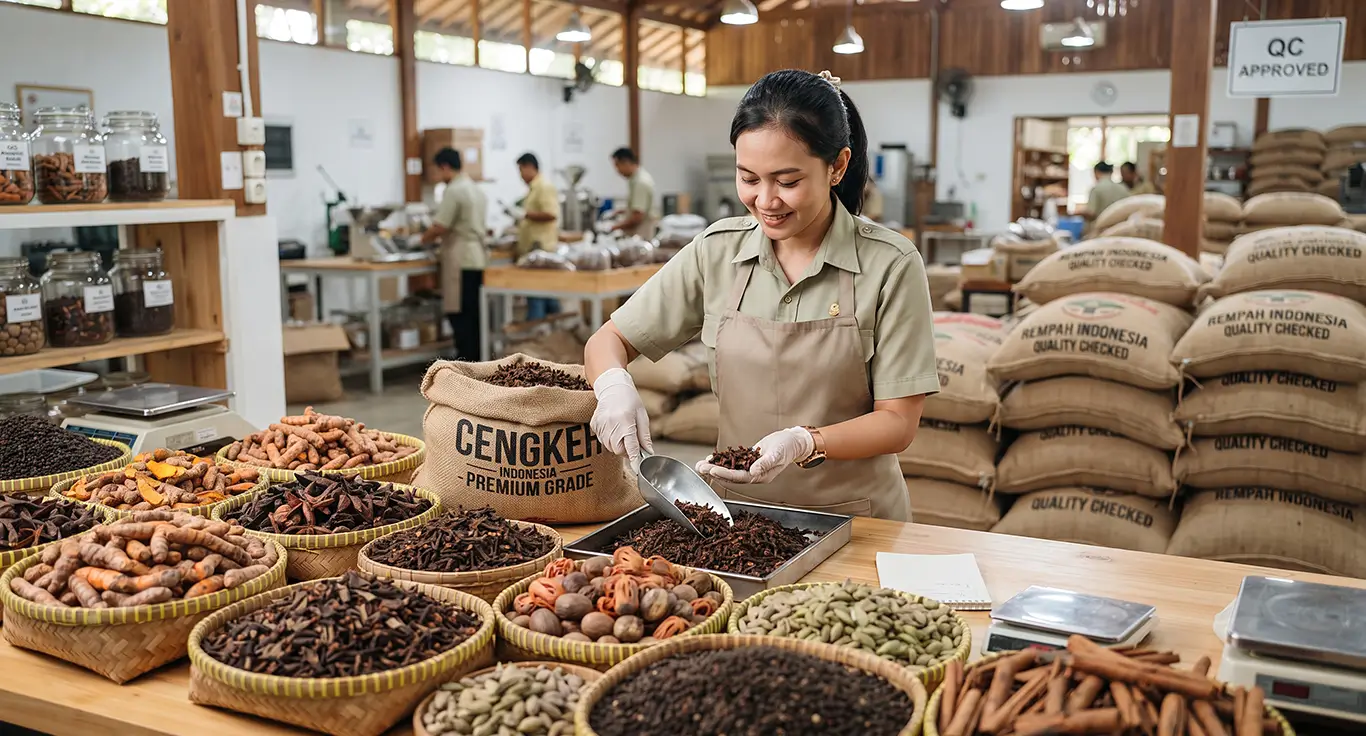
Physical inspection can help identify visible problems before the product moves further into processing.
Depending on the spice, checks may include color, size, cleanliness, foreign matter, damaged materials, and general appearance.
For ground spices, particle size and uniformity can also be important because they may affect blending, handling, and application.
Moisture and Storage
Moisture deserves particular attention because excessive moisture can affect the stability and storage performance of dried spices.
Proper storage conditions are therefore part of quality control, not an afterthought.
Spices should be handled and stored in conditions appropriate for the product and packaging system. The objective is to protect the product from quality deterioration during storage and transportation.
Processing and Handling
Cleaning, drying, grinding, and packing can all influence the final product.
A supplier should have controlled procedures for these stages rather than relying only on a final visual inspection.
For buyers, understanding how a spice is processed can provide useful insight into how consistently the supplier can reproduce the required specification.
Batch Inspection
Batch-to-batch inspection helps identify variation before the product reaches the customer.
The exact checks depend on the spice and its intended application. Some buyers may require specific laboratory tests or documented specifications in addition to physical inspection.
The important principle is simple: every shipment should be evaluated against an agreed quality standard rather than judged only by appearance.
How Buyers Can Evaluate Spice Quality
Buyers can make quality more manageable by defining their requirements before placing an order.
Instead of asking for simply “good quality” spices, specify the characteristics that matter for your application.
Consider defining:
- Spice type and variety
- Preferred origin, when relevant
- Whole, crushed, or ground form
- Color requirements
- Aroma and flavor characteristics
- Moisture requirements
- Particle size
- Cleanliness and foreign matter limits
- Packaging requirements
- Storage expectations
- Required testing or documentation
The right specification depends on how the spice will be used.
A restaurant purchasing spices for direct kitchen use may have different requirements from a manufacturer producing a packaged seasoning product.
Samples can also be useful before committing to a larger commercial order. Comparing samples against an agreed specification gives both sides a clearer understanding of the expected product.
Why Supplier Consistency Matters
A supplier’s ability to deliver consistent quality can be more valuable than a single excellent shipment.
Imagine receiving a very good spice batch for your first order. If the second and third shipments are noticeably different, the initial quality does not provide much business value.
For long-term purchasing, buyers need confidence that the supplier can maintain the required specification across multiple batches.
This is where communication becomes important.
A good supplier should be able to discuss product specifications, sourcing, processing, inspection, packaging, and storage rather than simply quoting a price.
Price still matters, but the lowest price is not necessarily the lowest total cost if inconsistent raw materials create production problems.
Questions to Ask Before Buying Spices
Before choosing a supplier, buyers can ask several practical questions:
- What quality specifications are used for this spice?
- How are raw materials selected and inspected?
- How is batch consistency monitored?
- What processing steps are applied?
- How is the spice stored before shipment?
- Can the supplier provide a product sample?
- What testing or quality documentation is available?
- How are changes in raw material or sourcing communicated?
These questions help shift the conversation from “What is the price?” to “What exactly am I buying?”
That distinction becomes important when spices are used as commercial ingredients.
Consistency Should Be Part of the Specification
Spice quality is not only about finding a product that meets expectations once.
For regular buyers, the real objective is repeatability.
A consistent spice allows a food business to maintain its recipes, production process, sensory characteristics, and customer expectations with fewer unexpected adjustments.
That is why Spice Quality Control should be considered throughout the supply chain, from raw material selection to processing, storage, inspection, and shipment.
When buyers define clear specifications and work with suppliers who understand the importance of batch consistency, purchasing becomes more predictable.
In the long run, consistency is what turns a good spice shipment into a reliable supply relationship.