Shipping a motorcycle internationally is not simply a matter of putting the unit into a container and sending it to another country. The way the motorcycle is inspected, prepared, packed, secured, and documented before departure can have a direct impact on its condition when it arrives.
For exporters, distributors, dealers, and commercial buyers, small preparation mistakes can create unnecessary problems. A loose component can move during transportation. Poor securing can cause scratches or instability. Incomplete export documentation can also delay the shipment.
This motorcycle shipping guide explains the main preparation steps to consider before sending motorcycles internationally.
Why Motorcycle Preparation Matters Before Shipping
A motorcycle can experience vibration, movement, handling, and changes in transportation conditions throughout its journey. It may be moved between a warehouse, truck, port, container, and destination facility before reaching the final customer.
That is why preparation should focus on two things: protecting the motorcycle and making the cargo ready for handling.
A properly prepared motorcycle should be clean, inspected, documented, protected from contact damage, and firmly secured in its shipping position.
Preparation also makes it easier to identify any existing scratches or defects before shipment. Taking photographs during the inspection provides useful documentation if the condition of the motorcycle needs to be checked later.
Motorcycle Shipping Preparation Checklist
Before packing begins, inspect each motorcycle individually.
Inspect the Motorcycle
Check the major visible components, including the body panels, fuel tank, wheels, handlebars, mirrors, lights, exhaust, suspension, and other exposed parts.
Photographs should be taken from several angles. Close-up photos can also be useful for documenting sensitive areas or existing marks.
The motorcycle should ideally be in clean condition before packing. Dirt or residue can make it more difficult to identify scratches or other surface issues during inspection.
Prepare the Fuel and Battery
Fuel and battery preparation should follow the requirements of the shipping carrier, port, and destination country. These requirements can vary depending on the transportation method and destination.
Do not assume that the same preparation procedure applies to every shipment. Confirm the requirements with the shipping provider before the motorcycle is loaded.
The battery should also be handled according to the applicable shipping requirements. This is particularly important when different motorcycle models or battery technologies are involved.
Remove or Secure Loose Parts
Accessories and components that can move during transportation should be removed or secured appropriately.
Mirrors, small accessories, detachable components, and other vulnerable parts may require additional protection. Components that remain installed should not be left in a position where they can rub against another motorcycle or the packing structure.
This step sounds simple, but it can prevent avoidable cosmetic damage.
Choosing the Right Motorcycle Shipping Method
The best shipping method depends on the number of motorcycles, destination, shipment volume, cost considerations, and the level of protection required.
Container Shipping
Container shipping is commonly used for commercial motorcycle exports because multiple motorcycles can be arranged inside the same container.
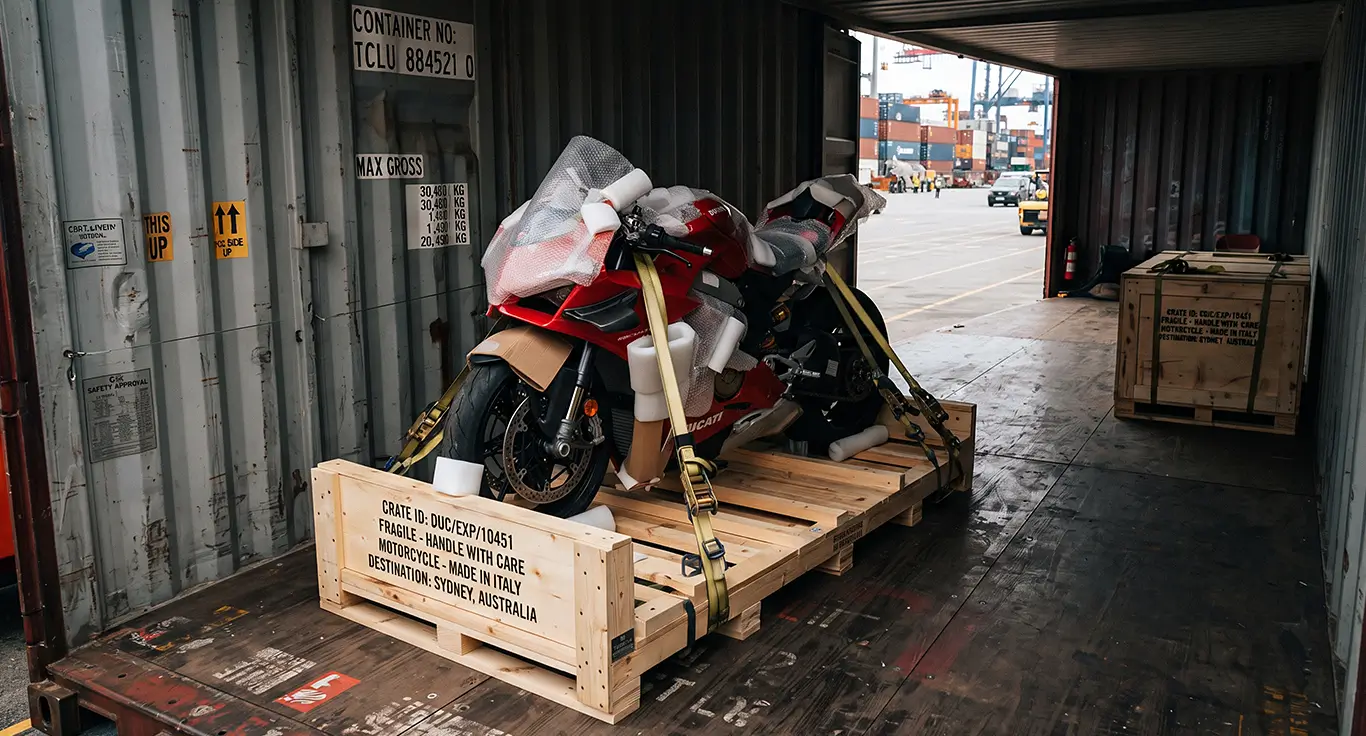
The motorcycles need to be positioned carefully so that available space is used efficiently without compromising protection. Each unit should be secured to prevent unwanted movement during transportation.
Container loading is therefore more than a space-utilization exercise. The arrangement needs to consider access, balance, protection, and safe handling.
Crated or Specialized Packing
For certain shipments, motorcycles may require additional packing or a crate-based solution.
This can be useful when the motorcycle needs greater physical separation from other cargo or when the shipment requires a specific packing configuration.
The packing method should be selected based on the motorcycle model, shipping conditions, handling requirements, and destination.
LCL Shipping for Small Orders
LCL, or Less than Container Load, can appear attractive when the order contains only one or two motorcycles because the exporter does not need to fill an entire container.
However, LCL is not automatically the most economical option.
For very small motorcycle orders, the cost per unit can become relatively high because the cargo may require additional handling and consolidation. For commercial display units or small orders, the total logistics cost should therefore be compared carefully with other available options.
How to Pack and Secure a Motorcycle
Good motorcycle packing should protect the unit from both movement and contact damage.
The motorcycle should be positioned securely before the final restraints are applied. Appropriate supports and securing points should be selected so that the motorcycle remains stable without placing unnecessary stress on sensitive components.
Protective materials can be used around areas that may come into contact with packing structures or neighboring motorcycles.
Particular attention should be given to painted surfaces, body panels, handlebars, wheels, exhaust components, and other exposed areas.
The packing configuration should also allow the motorcycle to be handled safely during loading and unloading.
For multiple motorcycles in one shipment, the units should be arranged with sufficient protection between them. They should not be positioned so closely that vibration or movement can cause one motorcycle to rub against another.
The final securing process should be checked before the container or cargo area is closed.
Documents to Prepare for Motorcycle Export
International motorcycle shipping also requires proper documentation.
The exact requirements depend on the origin country, destination country, motorcycle specifications, ownership status, and shipping arrangement. Exporters should confirm the current requirements with the relevant authorities, customs broker, freight forwarder, and destination-side importer.
Depending on the shipment, documents may include commercial invoices, packing lists, shipping documents, and motorcycle-related ownership or registration documents.
The information across documents should be consistent. Motorcycle descriptions, quantities, identification numbers, and other relevant information should be checked before submission.
Documentation errors can create delays even when the physical cargo has been prepared correctly.
Final Checks Before the Motorcycle Is Shipped
A final inspection should take place immediately before loading or container closing.
A practical checklist can include:
- Motorcycle condition inspected
- Photos taken
- Loose components secured
- Protective materials installed
- Fuel and battery preparation completed according to carrier requirements
- Motorcycle securely positioned
- Restraints checked
- Packing configuration inspected
- Quantity verified
- Identification numbers checked
- Export documents reviewed
- Shipping instructions confirmed
This final check creates a clear handover point between preparation and transportation.
It is also useful to keep records of the motorcycle’s condition and packing configuration. For commercial shipments, these records can help the exporter maintain a consistent packing standard across different orders.
Common Motorcycle Shipping Mistakes
One common mistake is treating every motorcycle shipment in exactly the same way. Different motorcycle models can have different dimensions, weights, components, and protection requirements.
Another mistake is focusing only on the motorcycle itself while ignoring the surrounding cargo environment. A motorcycle may be in good condition before loading but still suffer damage if it is poorly positioned or inadequately secured.
Choosing a shipping method based only on the lowest initial price can also be misleading. The total cost should include packing, handling, documentation, transportation, and potential additional charges.
Finally, exporters should avoid waiting until the motorcycle is ready for loading before checking shipping requirements. Fuel, battery, documentation, and packing requirements should be confirmed early enough to allow corrections.
What a Good Motorcycle Shipping Process Should Look Like
A reliable motorcycle export process follows a clear sequence:
Inspection → Preparation → Packing → Securing → Documentation → Final Check → Loading → Shipment
Each stage supports the next one.
The goal is not simply to move the motorcycle from one country to another. The goal is to deliver the motorcycle in the same condition expected by the buyer.
For exporters handling regular motorcycle shipments, a standardized packing and inspection procedure can make this process more consistent. The same checklist can be applied to every shipment, while specific adjustments can be made for different motorcycle models or destination requirements.
The most important lesson from motorcycle shipping is simple: safe delivery starts before the motorcycle leaves the warehouse. Good preparation reduces preventable risks, improves cargo handling, and gives both exporter and buyer greater confidence in the shipment.