A motorcycle can leave the warehouse in perfect condition and still arrive at its destination with scratches, damaged components, or signs of poor handling if the packing process is not done properly.
That is why motorcycle export packing needs to be treated as part of the shipping process, not as a final step before loading. The motorcycle must be prepared, protected, secured, and positioned according to how it will be transported and handled along the way.
For international motorcycle shipments, experienced packing methods can make a significant difference. The objective is simple: keep the motorcycle stable and protected throughout transportation so it arrives at the destination in the same condition it was prepared for shipment.
Why Motorcycle Export Packing Matters
International shipping exposes motorcycles to more handling and movement than local transportation. A shipment may pass through warehouses, ports, containers, trucks, and cargo handling equipment before reaching the final destination.
During this process, motorcycles can be exposed to vibration, movement, impact, pressure, and contact with other cargo.
Proper export packing helps control these risks.
The packing method should protect painted surfaces, body panels, lights, mirrors, handlebars, wheels, exhaust components, and other vulnerable parts. At the same time, the motorcycle needs to remain firmly secured so it does not shift during transportation.
Good packing also makes the cargo easier to handle. A properly prepared motorcycle can be loaded, secured, and unloaded more efficiently, reducing unnecessary handling risks.
What Makes Motorcycle Export Packing Different?
Packing a motorcycle for export is different from simply covering it with protective material.
The motorcycle has many exposed components and a relatively high center of gravity. Its wheels, handlebars, mirrors, body panels, and other parts can be vulnerable if the motorcycle is allowed to move inside the shipping space.
Protection Against Scratches and Impact
Painted surfaces are among the first areas that need protection. Direct contact between the motorcycle and wooden structures, straps, metal surfaces, or other cargo can create scratches or marks.
Protective materials can be placed around vulnerable areas before securing the motorcycle. The goal is to create separation between the motorcycle and anything that could rub against or impact it.
Extra attention should be given to areas that extend beyond the main body of the motorcycle, such as mirrors, handlebars, levers, indicators, and exhaust components.
Stability During Transportation
A motorcycle should not be allowed to move freely inside a crate or container.
Wheels need to be positioned securely, while the motorcycle itself should be restrained at suitable structural points. Tie-down systems should provide stability without placing unnecessary pressure on fragile components.
The exact securing method depends on the motorcycle design and the shipping arrangement.
Efficient Use of Shipping Space
Export packing also needs to consider shipping efficiency.
Motorcycles may be shipped individually, in crates, or as multiple units inside a container. The packing configuration should provide sufficient protection while making sensible use of available cargo space.
Poor positioning can waste container capacity or create unnecessary contact between motorcycles.
Common Motorcycle Packing Methods
There is no single packing method that works for every motorcycle shipment. The appropriate approach depends on the motorcycle model, shipment quantity, destination, transportation mode, and customer’s requirements.
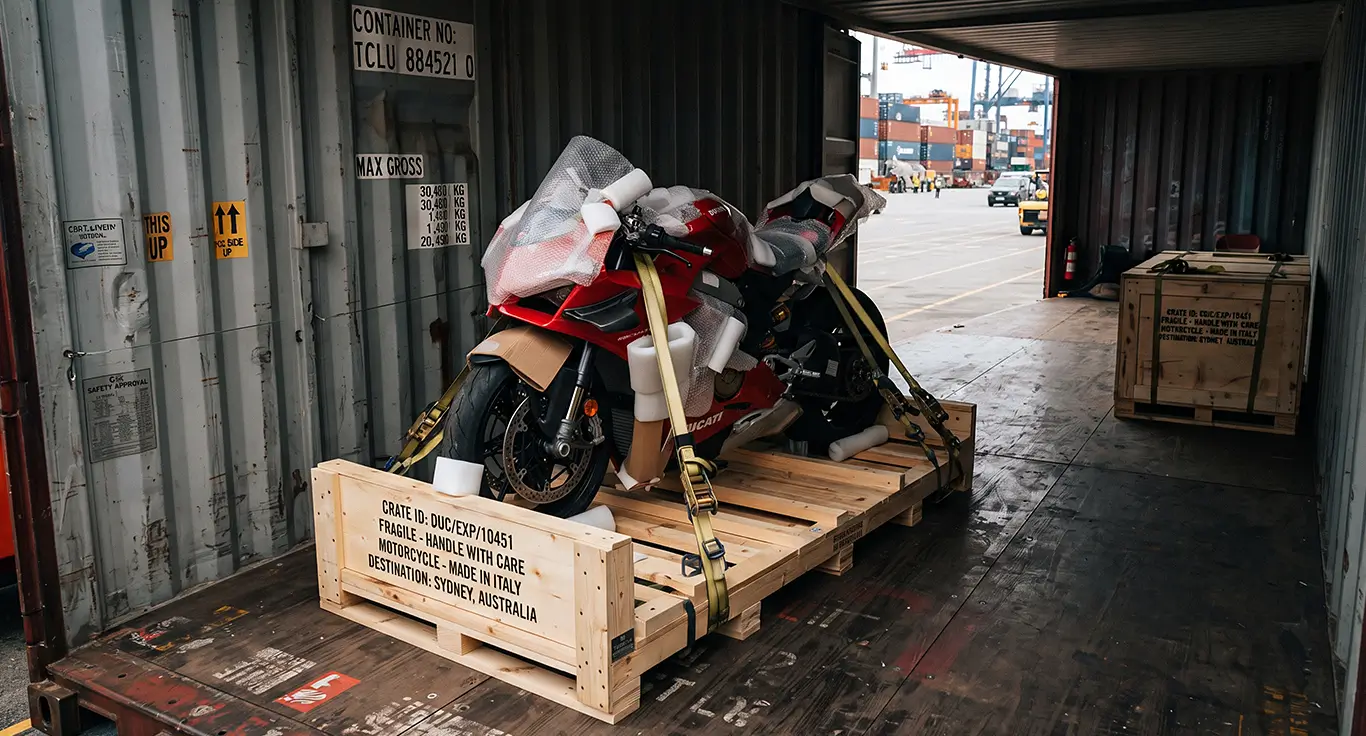
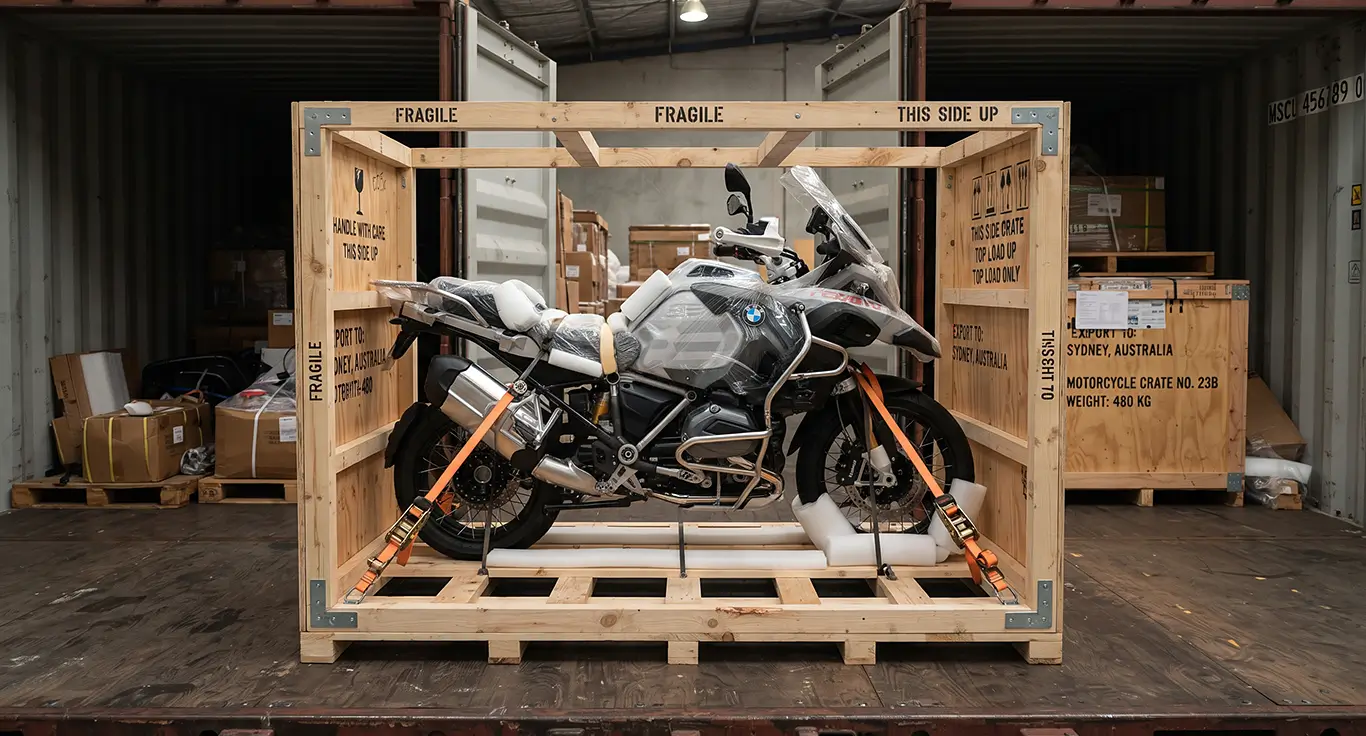
Individual Wooden Crate Packing
Wooden crates are commonly used when motorcycles need additional physical protection during transportation.
The motorcycle is positioned inside a suitable structure and secured to reduce movement. Protective materials can then be added around exposed components.
A well-designed crate should provide enough clearance around vulnerable motorcycle parts. It should not simply hold the motorcycle in place; it should also reduce the possibility of external objects contacting the motorcycle.
Wood selection and crate construction may also need to comply with applicable export and destination requirements.
Frame and Component Protection
Not every part of a motorcycle needs the same type of protection.
Hard structural areas can be used for securing, while painted or fragile components require additional protective layers.
Typical areas requiring attention include:
- Fuel tank and painted body panels
- Headlights and indicators
- Handlebars and mirrors
- Front and rear wheels
- Exhaust components
- Levers and controls
- Other protruding parts
Protective materials should be installed carefully so they do not create new pressure points or rub against sensitive surfaces.
Container-Based Packing
For multiple motorcycles, container loading becomes an important part of the packing methodology.
Motorcycles should be arranged to use the available space efficiently while maintaining sufficient clearance and protection. Each unit needs to remain stable during the movement of the container.
The loading configuration also needs to consider how the motorcycles will be unloaded at the destination.
A packing method that looks efficient during loading may create difficulties during unloading if access is blocked or motorcycles are positioned too tightly.
Step-by-Step Motorcycle Export Packing Process
A reliable motorcycle export packing process generally starts before any protective material is installed.
1. Inspect the motorcycle
The motorcycle should be checked before packing. Existing marks or damage should be identified so the condition before shipment is clear.
2. Prepare the motorcycle
Depending on the shipment requirements, the motorcycle is prepared for transportation. Loose or vulnerable components should be addressed before packing.
3. Protect vulnerable surfaces
Protective materials are placed around painted surfaces and components that could be scratched, pressed, or impacted during handling.
4. Position the motorcycle
The motorcycle is placed in its crate, frame, or designated container position. Adequate clearance should be maintained around vulnerable areas.
5. Secure the motorcycle
Wheels and suitable structural points are secured to limit movement. Restraints should hold the motorcycle firmly without damaging the motorcycle itself.
6. Add external protection
Additional protective structures or materials are installed where necessary, particularly around areas exposed to contact during loading and transportation.
7. Inspect the packed unit
Before shipment, the packing should be checked for stability, clearance, exposed surfaces, and potential contact points.
This final inspection is important because a packing problem is much easier to correct before the cargo leaves the facility.
How to Prevent Scratches and Damage
Scratch prevention is not achieved by using one particular material. It comes from controlling contact and movement.
A motorcycle that moves inside its packing structure can gradually rub against protective materials or structural components during transportation. Even small movement can become a problem over a long international journey.
The packing process should therefore focus on three things:
Keep the motorcycle stable.
Movement should be minimized using an appropriate securing system.
Separate vulnerable surfaces.
Painted and fragile components should not have direct contact with hard surfaces.
Check potential pressure points.
Straps, supports, and packing structures should not place excessive pressure on sensitive components.
It is also useful to document the motorcycle’s condition before packing. Photos can provide a visual record of the motorcycle before shipment and help with inspection procedures.
Choosing the Right Packing Method
The safest packing method depends on the shipment rather than simply choosing the strongest possible packaging.
For example, an individual motorcycle may require a different configuration from a shipment containing many units. A shipment using FCL container transportation may also have different loading considerations from other cargo arrangements.
Consider these factors before selecting a packing method:
| Factor | What to Consider |
|---|---|
| Motorcycle model | Dimensions, weight, design, and vulnerable components |
| Shipment quantity | Individual unit or multiple motorcycles |
| Shipping method | Container, LCL, FCL, or other transportation arrangements |
| Destination | Handling conditions and import requirements |
| Protection level | Required protection against movement and external contact |
| Loading space | Available container or cargo dimensions |
| Unloading | How the motorcycles will be safely removed |
The best solution balances protection, stability, handling, and shipping efficiency.
Common Packing Mistakes to Avoid
Several packing mistakes can create unnecessary risks.
Using insufficient restraints can allow the motorcycle to move during transportation.
Securing fragile components instead of structural points can cause damage even when the motorcycle appears stable.
Leaving painted surfaces exposed increases the possibility of scratches during handling.
Packing motorcycles too closely together can create contact points between units.
Ignoring unloading conditions can make a carefully packed shipment difficult to handle at the destination.
Another common mistake is treating every motorcycle model exactly the same. Different designs may require different protection and securing points.
What Experienced Motorcycle Packers Do Differently
Experience matters because motorcycle export packing involves more than following a basic checklist.
Experienced packers learn where motorcycles are most vulnerable, how different models behave when secured, and where movement or contact is likely to occur.
They also understand that packing and loading are connected. The motorcycle needs to be protected not only inside the crate or container but also during the complete handling process.
A good packing methodology therefore looks at the shipment from preparation to destination handling.
The objective is not to claim that damage is impossible. International transportation always involves external risks. The practical goal is to reduce preventable damage by using a consistent packing and inspection process.
Final Considerations Before International Shipment
Motorcycle export packing should give the motorcycle three layers of protection: surface protection, structural stability, and controlled cargo positioning.
Surface protection helps reduce scratches and contact damage. Proper securing keeps the motorcycle stable. Careful positioning ensures the motorcycle and its packing structure work together during transportation.
For exporters, this approach can also create a more consistent shipping process. When motorcycles are packed using a repeatable methodology, each shipment can be checked against the same basic standards before leaving the facility.
The real measure of good motorcycle export packing is not how impressive the crate looks. It is whether the motorcycle remains properly protected and secured throughout the journey.
When the packing method is designed around the motorcycle, the shipping method, and the handling process, the risk of preventable damage can be significantly reduced.