A product can be excellent, but if its packaging looks generic, customers may have little reason to remember it.
This is one reason F&B brands are increasingly paying attention to bespoke packaging. Instead of choosing an off-the-shelf box, pouch, or container and simply adding a logo, brands can develop packaging around the product, target market, and identity they want to communicate.
For coffee bean products, the need is even more practical. Packaging has to protect the beans while also communicating important information about the coffee and giving the brand a recognizable appearance.
Bespoke packaging brings these two sides together: product function and brand expression.
What Is Bespoke Packaging?
Bespoke packaging is packaging designed or customized specifically for a particular product or brand.
The customization can involve more than graphics. It may include the packaging structure, dimensions, material, finish, opening method, printing, labeling, and other details that influence how the product is presented and handled.
This makes bespoke packaging different from simply putting a logo on standard packaging.
For an F&B brand, the packaging can be developed around questions such as:
- What type of product is being packed?
- How much product needs to fit inside?
- What protection does the product require?
- Who is the target customer?
- Where will the product be sold?
- What should customers immediately associate with the brand?
The answers help determine whether the packaging should prioritize convenience, protection, premium presentation, transport efficiency, or a combination of these factors.
Why Standard Packaging Can Limit Brand Expression
Standard packaging is not necessarily a bad choice. It can be practical for new businesses, limited production runs, or products that do not require a distinctive format.
The limitation is that many brands may end up using similar packaging structures.
A standard pouch, bottle, box, or container can carry attractive artwork, but the basic shape and experience may still look familiar. For brands competing in crowded F&B categories, that can make differentiation harder.
Bespoke packaging gives a brand more control over the complete presentation.
The dimensions can be adjusted to the product. The visual elements can follow the brand identity. The opening and closing experience can be considered during development. Even small structural details can contribute to how customers perceive the product.
That does not mean custom packaging automatically makes a product better. The customization needs to solve a real branding or packaging requirement.
How Bespoke Packaging Strengthens F&B Branding
Creates a Recognizable Visual Identity
Brand recognition is not only about a logo.
Customers can recognize a product through a combination of colors, typography, packaging shape, imagery, materials, and other visual cues. When these elements are consistently applied, packaging becomes part of the brand identity.
Bespoke packaging gives an F&B brand more opportunities to build this consistency.
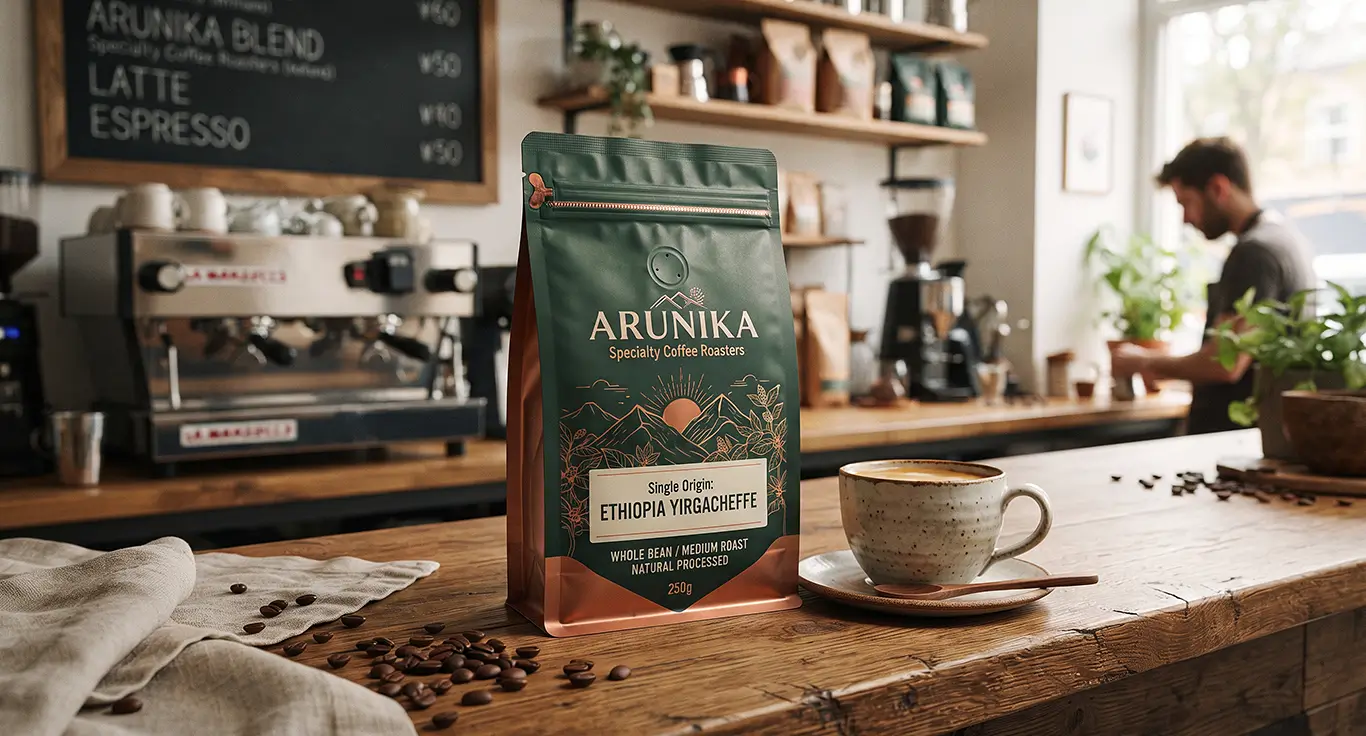
For example, a coffee brand may use a particular pouch structure, label layout, typography, and material finish across several coffee variants. The individual products can look different while still feeling like they belong to the same brand family.
This becomes especially useful when a brand expands its product range.
Supports Premium Product Positioning
Premium positioning is not created by expensive-looking packaging alone.
Customers may associate quality with the overall product presentation, including the quality of the packaging, print, finishing, information hierarchy, and physical experience.
A well-designed package can make a product feel more considered and intentional.
For example, a specialty coffee brand targeting customers who care about origin and brewing may choose packaging that gives enough space for information such as origin, roast profile, tasting notes, and processing method.
The packaging becomes part of the product story rather than simply a container.
Improves Product Presentation
Packaging is often the first physical interaction customers have with an F&B product.
This matters in retail environments, online product photography, exhibitions, cafés, and corporate gifting.
A bespoke structure can help the product maintain a consistent appearance across these situations. It can also make it easier for the brand to create a distinctive presentation without relying entirely on promotional materials.
Good packaging should make sense when viewed from different angles, not just in a front-facing product photo.
Coffee Bean Packaging as a Practical Example
Coffee beans are a useful example because their packaging needs to balance branding with product protection.
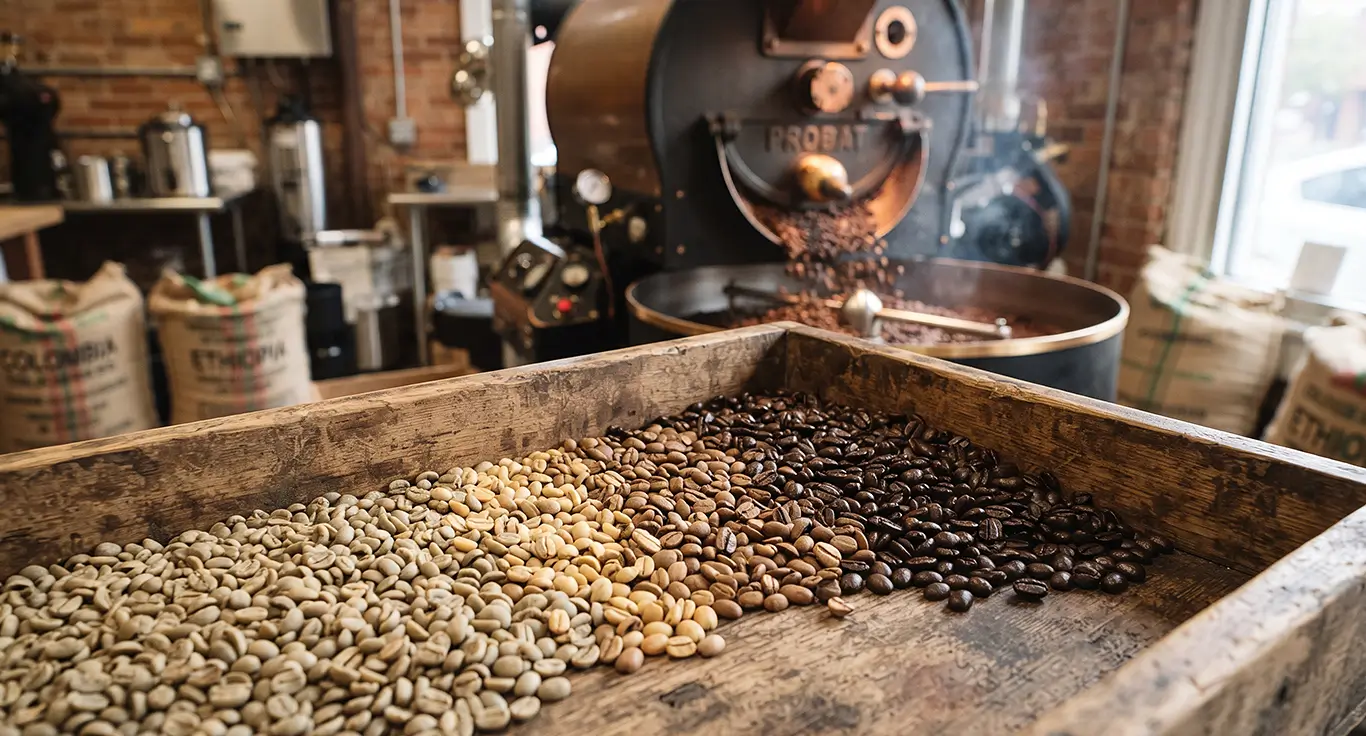
Coffee is sensitive to factors such as oxygen, moisture, light, and heat. Packaging therefore needs to be selected according to the product and intended storage conditions rather than based only on appearance.
Protecting the Product
For roasted coffee beans, packaging is part of maintaining product quality after roasting.
A suitable coffee bag may use barrier materials and features such as a one-way degassing valve, depending on the product and packaging requirements.
The exact packaging specification should be determined according to factors such as roast characteristics, expected shelf life, distribution conditions, filling process, and storage environment.
This is where bespoke packaging can be useful.
Instead of starting with a design and trying to make the product fit it, the packaging can be developed around the actual requirements of the coffee.
Choosing the Right Format
A coffee brand may sell several pack sizes, such as smaller packs for trial purchases and larger packs for regular customers.
A bespoke packaging approach can help create a consistent system across those sizes.
For example, the same visual identity can be maintained while the packaging dimensions, product information, and variant identification change according to the product.
The result is a packaging system rather than a collection of unrelated bags.
Connecting Packaging With Coffee Branding
Coffee brands often have stories around origin, processing, roasting, farmers, regions, or flavor profiles.
Packaging provides a physical space to communicate those details.
A brand selling single-origin coffee, for instance, may need packaging that gives greater emphasis to origin and product information. A coffee brand focused on everyday convenience may have different priorities.
Bespoke packaging allows the structure and design to follow that positioning.
The important point is that the packaging should communicate what makes the coffee relevant to its target customer, rather than simply trying to look premium.
What to Consider Before Creating Bespoke Packaging
Custom packaging requires more planning than selecting a ready-made package.
Start with the product itself.
Consider the product dimensions, quantity, physical characteristics, protection requirements, filling process, transportation, and storage conditions.
Then consider the brand.
Ask what customers should recognize immediately. Is the brand positioned as premium, approachable, traditional, modern, sustainable, or highly specialized?
The packaging should support that position.
Cost is another important consideration. Bespoke packaging can involve development, tooling, printing, minimum order quantities, sampling, and other production requirements.
For smaller F&B brands, it may make more sense to customize selected elements rather than develop an entirely unique structure.
There is also a practical question: Can the packaging be produced consistently at the required scale?
A packaging concept may look impressive as a prototype but become inefficient or expensive during mass production. Working with the packaging manufacturer early can help identify these issues before production.
When Bespoke Packaging Makes Sense for an F&B Brand
Bespoke packaging can be particularly useful when packaging is an important part of the customer’s perception of the product.
It may make sense when:
- The product competes in a crowded category.
- The brand has a clear visual identity.
- The product is positioned toward a premium or specialty market.
- Existing packaging does not fit the product properly.
- The brand needs multiple product variants with a consistent packaging system.
- Product protection requires specific packaging characteristics.
- Packaging is an important part of retail or gifting presentation.
It may be less suitable when the additional customization provides little practical or branding value.
A small F&B business with limited production volume, for example, may benefit more from a well-designed standard package with high-quality printing than from developing a completely custom structure.
The right choice depends on the business model, product requirements, budget, and expected production volume.
The Goal Is Not Just Customization
The biggest mistake with bespoke packaging is treating customization as the goal itself.
A package does not become valuable simply because it is different.
The stronger approach is to ask what the packaging needs to accomplish.
It may need to protect coffee beans during distribution. It may need to communicate product information clearly. It may need to make several SKUs feel connected. It may need to create a better unboxing experience or help a product stand out in a crowded retail environment.
Once those requirements are clear, customization becomes a tool for solving them.
For F&B brands, the best bespoke packaging sits at the intersection of function, product protection, brand identity, and customer experience.
That is what makes it more than a container. It becomes part of how the product is recognized, understood, and remembered.